

Friends and Neighbors,
October has brought us crisp fall leaves, much-needed rain and a productive interim week on Capitol Hill as we prepare for our upcoming 2027 General Session. I hope you’ve had a chance to enjoy the season and spend time with family and friends.

As the month comes to a close, Election Day is approaching. The decisions we make at the ballot box will help shape our communities and our state’s future. Taking time to learn about the candidates and issues is an important part of our civic responsibility, and I encourage Utahns to plan to vote by November 3.
If you are not registered, you can still register and vote using a provisional ballot at a designated voting location on Election Day. Bring two acceptable forms of identification, one verifying your identity and another showing where you live. Visit vote.utah.gov for details.
If you’re returning a mail ballot, make sure your county clerk receives it by 8 p.m. on November 3, regardless of when it is postmarked. Mail it early to allow time for delivery or return it to an official ballot drop box before 8 p.m. on Election Day. Find drop-off locations at vote.utah.gov.
The Voter Information Pamphlet provides information about the candidates and issues on your ballot. I encourage you to take a few minutes to review it and cast an informed vote.
Helping Utahns Build Lasting Recovery
Lasting recovery takes more than a place to stay. It takes treatment, support and opportunities to rebuild. Utah’s newly launched ARCH Project brings those pieces together, helping people facing addiction, homelessness and repeated involvement with the justice system find a path toward stability.
Earlier this year, we passed legislation to establish the ARCH Project and funded $2.6 million for facility renovations and $6 million in ongoing funding for staffing and operations. The program combines treatment, recovery services, employment assistance and housing to help participants move beyond repeated stays in jails, shelters and emergency rooms. Overseen by the Utah Department of Corrections, ARCH works closely with courts so eligible individuals can participate as part of their sentences.
The goal is to pair compassion with accountability. Participants receive support to address the challenges that brought them into the system, along with structure to help them move forward. Together, these resources can help people build the skills and stability they need for lasting recovery.
The Recovery Utah Initiative builds on that work by bringing state agencies, community and faith organizations, businesses and people who have experienced homelessness together to help more Utahns access treatment and recovery support.
Everyone deserves a chance to rebuild. These efforts reflect the Senate’s commitment to helping Utahns find lasting recovery, a stable home and opportunities to thrive in their communities.
Responsibly Transforming Healthcare with AI
Access to health care should not depend on how close someone lives to a specialist. Artificial intelligence could help expand options for Utahns, particularly in rural communities, but it must remain human-guided and focused on improving people’s well-being. That means putting patient safety first, with careful evaluation and human oversight as Utah explores tools to support providers and help patients manage their health.
This month, Utah added a health care pillar to its Pro-Human AI Initiative and expanded a state-supervised program for testing clinical AI tools. Through the Office of Artificial Intelligence Policy, the approved pilot program will gather real-world information about safety and effectiveness, with independent technical and clinical evaluators helping regulators verify developers’ claims.
Human oversight is built into the process. The pilots include specialist oversight for AI-assisted acne care and a phased prescription-refill pilot that requires physician review before authorizing prescriptions. University of Utah Health and Intermountain Health also received agreements creating review pathways for future pilots, each of which must be individually vetted.
Organizations testing these AI tools must follow several layers of state oversight, including review by the Division of Professional Licensing. They must clearly tell patients when they are using AI.
Independent technical and medical experts will help evaluate whether these AI tools work, meet clinical standards and serve patients safely. The findings will be shared with the Legislature and the public, giving us as lawmakers data to guide future health care policies and safeguards.
As AI’s capabilities grow, the Senate’s focus remains on protecting patient privacy, preserving clinical judgment and ensuring these tools serve Utahns’ best interests. Establishing safeguards and using findings from supervised trials to inform smart policymaking are essential to that work. Utah is taking a thoughtful, responsible approach to innovation to help ensure medical advances serve the public good. Learn more about the supervised trials and patient safeguards at ai.utah.gov

Happy Halloween
Halloween is a fun opportunity to enjoy the season, spend time with family, and see neighborhoods come together. I love seeing your neighborhoods come alive with costumes and decorations, and I hope you and your family get to enjoy some of that Halloween magic this year!
If your family is heading out to trick-or-treat, help children stay visible with lights or reflective clothing. Remind them to use crosswalks, look carefully before crossing and watch for vehicles throughout the evening. Drivers can help by slowing down and staying especially alert in neighborhoods and near intersections, where excited children may be difficult to see after dark.

I hope you and your family enjoy the costumes, neighborhood traditions and time together. Wishing you a happy, safe Halloween!
Thanking Utah’s First Responders
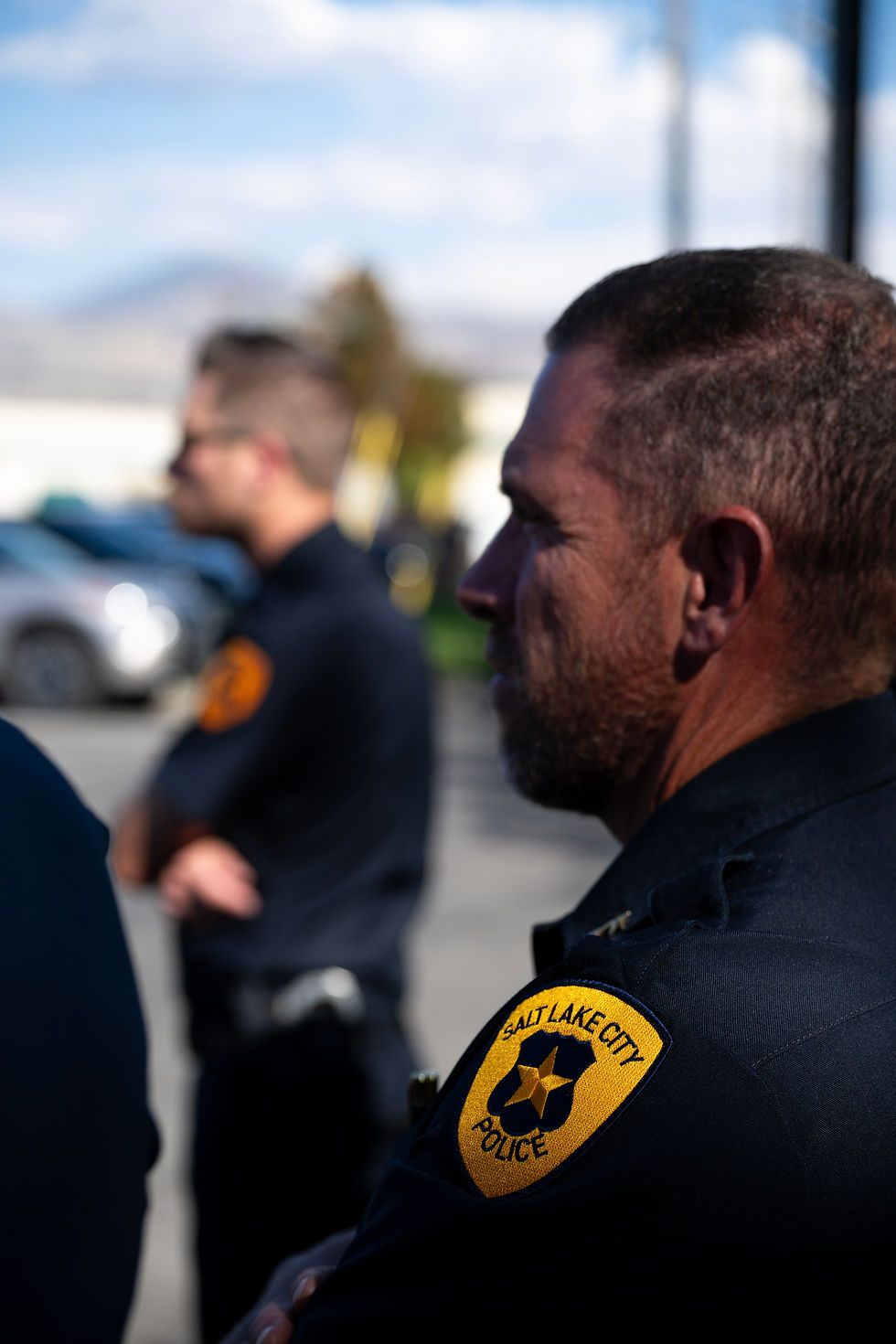
When an emergency happens, Utahns depend on people who are trained and ready to respond. October 28 is National First Responders Day, an opportunity to thank the firefighters, law enforcement officers, emergency medical personnel, dispatchers and search and rescue teams who serve our communities.
This year’s wildfires and flooding have shown how demanding that service is. Behind each response are people working long hours, making difficult decisions, and putting others' safety first. Their work also continues through the everyday emergencies that rarely make headlines.
To Utah’s first responders: thank you for the skill, care and determination you bring to your work. Your service matters to the people you help and to the families and communities who rely on you.
A note to a local department or a personal word of thanks is a simple way to recognize that service and let first responders know their efforts are appreciated.

Helping Communities Recover After Disaster
After a difficult summer of wildfires and flooding, our communities continue rebuilding. The federal assistance will help Beaver and Piute counties repair public infrastructure damaged by the Cottonwood Fire and subsequent flooding and mudslides, an important step in helping our neighbors recover.
President Donald Trump approved a major disaster declaration on October 7, making FEMA public assistance available to eligible entities for recovery work. This support builds on the efforts of local leaders, first responders, crews and volunteers who have worked to protect lives and property and help their neighbors.
Recovery will take continued coordination among our communities and state and federal agencies. I am grateful for everyone who has stepped forward during these difficult circumstances, and I remain committed to supporting our communities as they rebuild and move forward.
Understanding Utah’s Gas Prices
Gas prices remain a concern for Utah families. While international events influence what we pay at the pump, refining capacity, pipelines and reliable supplies also affect prices here at home.
This month, I toured the Chevron and Marathon refineries in Utah to learn more about the refining process and the challenges of meeting future fuel demand. The visits offered a closer look at the facilities that supply our state and informed legislative work on fuel affordability and energy security.
Earlier this year, we passed legislation to reduce Utah’s gas tax by six cents per gallon, helping families save each time they fill up. We also passed legislation to streamline pipeline permitting and help increase fuel supplies.
The tax reduction provides immediate savings, while improving fuel infrastructure supports a more reliable supply over time. We must keep working with industry partners on long-term solutions that help keep fuel affordable for Utah families and keep us energy independent.
Investing in the Future of the Great Salt Lake
The Great Salt Lake is one of Utah’s most important natural resources. It supports millions of migratory birds, sustains wetlands and contributes to our economy. Its health also affects our air quality, making its protection important to communities across Utah.
Earlier this year, we passed a resolution authorizing a land transfer as part of a settlement that requires at least $60 million in compensation dedicated exclusively to projects benefiting the Great Salt Lake. The settlement resolves a decades-old dispute by transferring 22,311 surface acres to the Bear River Migratory Bird Refuge, turning a long-standing disagreement into an investment in the lake’s future.
This agreement builds on legislative efforts to conserve water, improve efficiency and protect critical habitat. Agricultural water optimization, secondary water metering and tools that conserve water and dedicate it to the lake are part of that broader work.
Progress requires sustained coordination among communities, farmers, water users and state and federal partners. This settlement turns a long-standing dispute into additional resources to support that work.

Helping More Utahns Find Recovery and Stability
(Recovery Utah Initiative)
Helping people recover from addiction and find stable housing requires treatment, practical support and coordination among the organizations serving them. Earlier this year, we appropriated more than $40 million in the Legislature to support work addressing addiction, homelessness and serious mental illness. The Recovery Utah Initiative builds on those investments by connecting services and strengthening long-term recovery support.
These challenges often overlap. A person working toward recovery may also need housing, employment assistance and ongoing mental health care. Connecting those services can help people get the support they need to move forward.
The new Recovery Utah Initiative complements legislative work on addiction, homelessness and serious mental illness. Established through an executive order, it creates a council bringing together state agencies, businesses, faith organizations and people who have experienced homelessness to strengthen coordination across treatment, recovery services, public safety and economic opportunity.
Utah’s ongoing work to expand access to treatment and address homelessness comes alongside encouraging signs of progress: a 9.7% decline in unsheltered homelessness and a 9.3% decline in fatal overdoses. This initiative offers an opportunity to build on those efforts and help more Utahns find lasting recovery and stability.

Expanding Utah’s Transportation Options
Air taxis may bring to mind The Jetsons, and Utah is exploring how that once-futuristic idea could serve real needs. Potential uses include connecting rural communities, delivering critical medical supplies and supporting emergency response. As our state grows, we in the Senate are working with transportation and aviation leaders to understand how electric aircraft and air taxis could safely expand transportation options for Utahns.
Through the Utah Department of Transportation’s uFLY initiative, Utah leads a five-state partnership selected as one of just eight projects nationwide to test advanced aviation technologies. These tests will help determine how new aircraft can operate safely and reliably within our transportation system.
Testing will include urban areas, rural routes, mountainous terrain and wildfire-prone regions across the West. These varied settings will help researchers understand how the aircraft perform in conditions relevant to Utah and whether they could support services such as emergency and wildfire response.
A recent all-electric aircraft demonstration at Salt Lake City International Airport offered a closer look at the possibilities. The electric aircraft demonstrated is designed to use existing airports, which could open new options for cargo and medical deliveries while building on Utah’s existing infrastructure.
We are examining the infrastructure and policies needed to support these technologies, including how they would connect with existing transportation services. Learning from these tests will help guide decisions about where new aviation options can best serve Utah families and communities.

Protecting Public Safety and Personal Privacy
Technology can help law enforcement solve crimes, but protecting public safety also means respecting Utahns’ privacy. License plate readers demonstrate the need for both responsibilities because they collect information about vehicles traveling through our communities.
Utah law already restricts law enforcement access to license plate reader data to specific purposes, including active criminal investigations, apprehending people with outstanding warrants, locating missing or endangered people and recovering stolen vehicles.
Who can access this information, how it is shared and whether those rules are consistently enforced deserve close scrutiny. The Senate takes these concerns seriously. Strong guardrails must be clear in law and effective in practice.
The Law Enforcement and Criminal Justice Interim Committee is examining whether existing safeguards are working as intended. Legislators also met with law enforcement officers to better understand how the cameras are used, what information they collect and their limitations. Discussions included reviewing vendor contracts and ensuring that requests for information from outside Utah comply with the law. We are committed to assessing what changes and safeguards are needed.
Utahns deserve effective law enforcement and confidence that their personal information is handled responsibly. That means holding these tools to clear standards and addressing problems when safeguards fall short.
Senator Ron Winterton


Comments